

Black Sea Fleet 1918: Neptun’s Trident Documentary
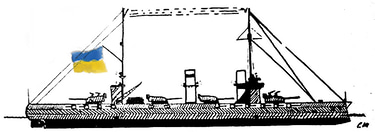
On April 29, 1918, the ships of the Black Sea Fleet raised the Ukrainian flag in Sevastopol. For a brief but historic moment, one of the most powerful naval forces in the region declared allegiance to the newly emerging Ukrainian state. This dramatic event, long marginalized in mainstream historiography, stands as one of the defining episodes of the Ukrainian Navy 1917–1918 period.
The documentary film Neptun’s Trident explores this largely forgotten chapter of history, tracing how Ukrainian sailors within the fleet organized, asserted their identity, and ultimately influenced the course of naval events during the collapse of the Russian Empire.

For broader historical background on the Black Sea Fleet 1917–1918, see our detailed article here
Historical Context of the Black Sea Fleet 1918
The events of 1918 cannot be understood without placing the Black Sea Fleet within the wider geopolitical collapse of Eastern Europe during the First World War. By early 1917, the Russian Empire was exhausted by years of war, economic instability, and political unrest. The February Revolution shattered imperial authority, and the October Bolshevik seizure of power deepened uncertainty across the former empire’s military structures.
The Black Sea Fleet, stationed in Sevastopol, found itself at the center of this transformation. Once a symbol of imperial power and strategic ambition in the Black Sea, it suddenly became an institution without a clear political master. Officers, sailors, and dockyard workers were forced to reconsider their allegiance amid rapidly changing political realities.
At the same time, new political forces were emerging. The Ukrainian Central Rada in Kyiv declared autonomy and later independence, seeking to establish control over military units composed largely of Ukrainian soldiers and sailors. Within the fleet, questions of identity, loyalty, and command were debated openly. Was the fleet to serve the Bolshevik government in Petrograd, a restored Russian authority, or the newly proclaimed Ukrainian state?
The Treaty of Brest-Litovsk in March 1918 further complicated the situation. German and Austro-Hungarian forces advanced into Ukrainian territories, altering the balance of power in the region. Bolshevik influence in southern Ukraine weakened, creating a temporary political vacuum in Sevastopol. It was within this fragile and shifting environment that Ukrainian naval activists regained momentum.
Thus, the raising of the Ukrainian flag over the ships of the Black Sea Fleet on April 29, 1918 was not an isolated symbolic gesture. It was the culmination of months of political struggle inside a fleet caught between collapsing empires and emerging nations. The moment reflected both the instability of the era and the determination of Ukrainian sailors to assert a distinct national maritime identity.
The Black Sea Fleet Before 1918
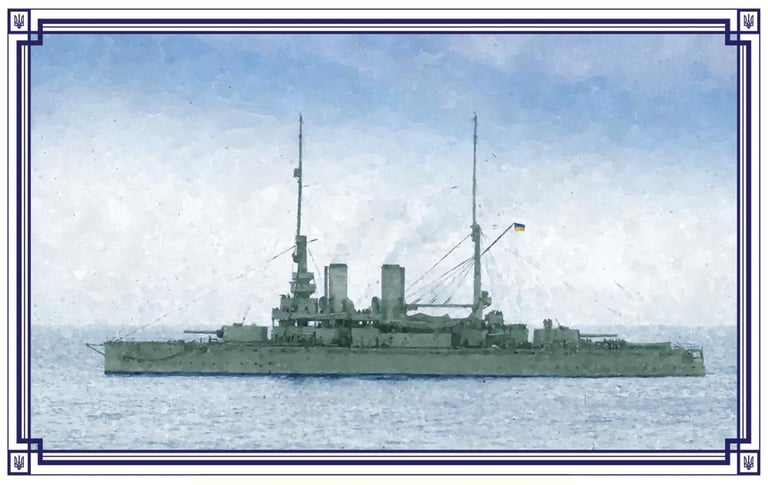
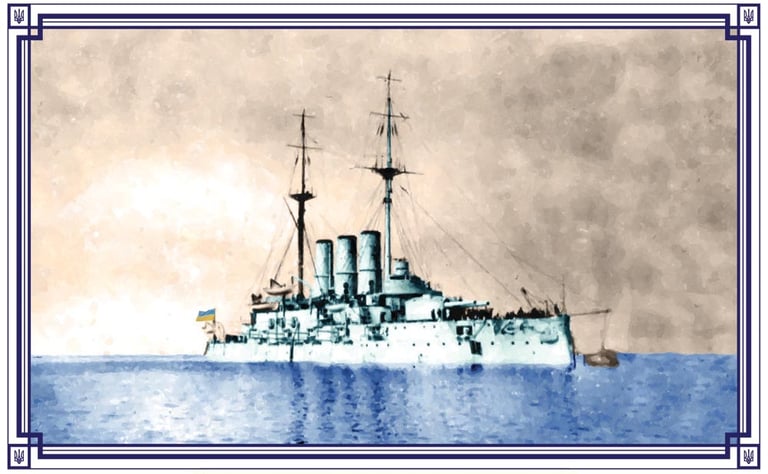
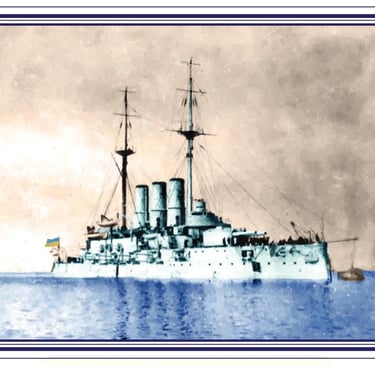
Before the First World War, the Black Sea Fleet was the dominant naval power in the Black Sea. Headquartered in Sevastopol, it played a central strategic role in the Russian Empire’s long-term ambition to secure access to the Mediterranean through the Turkish Straits. Control of these sea routes was considered vital for imperial expansion and geopolitical influence.
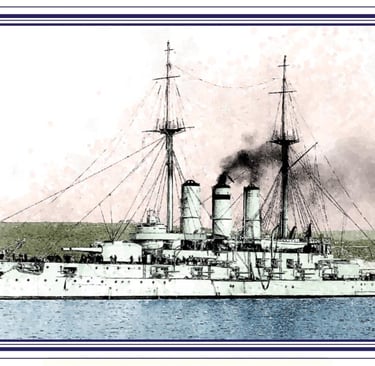
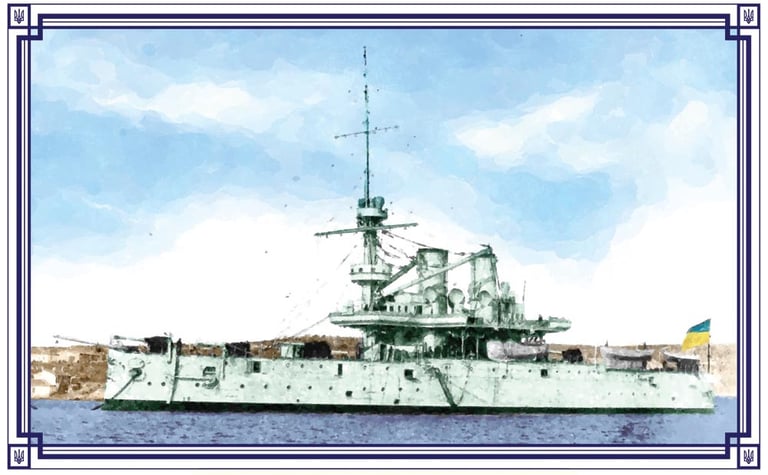
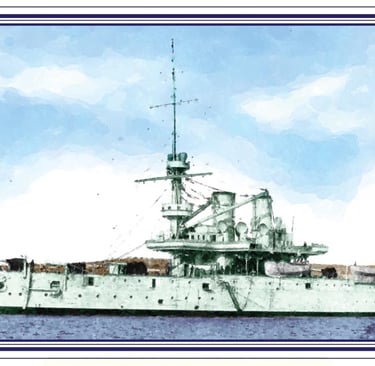
The fleet’s pre-dreadnought battleships, cruisers, and destroyers symbolized military strength in the region. At the beginning of the twentieth century, it had no fully adequate rival. The opposing Ottoman fleet consisted largely of outdated vessels in poor technical condition. However, when the Ottoman Empire initiated plans to modernize its navy by ordering new dreadnought battleships from British shipyards, Russia responded by launching its own dreadnought construction program for the Black Sea Fleet.
Despite this naval race, none of the new Russian dreadnoughts were fully battle-ready at the outbreak of the First World War in 1914. The fleet entered the conflict in a transitional state, still relying heavily on older capital ships.
Beneath the imperial command structure, a significant proportion of sailors and officers were of Ukrainian origin. Official imperial narratives rarely acknowledged this demographic reality. Nevertheless, Ukrainian cultural and political movements were already active in the early twentieth century, both within civilian society and among military personnel.
The upheavals of 1917 transformed the political landscape. As the Russian Empire collapsed, long-suppressed national identities resurfaced. The fleet, like much of the former imperial armed forces, faced a crisis of loyalty and authority. It was in this atmosphere of uncertainty and redefinition that Ukrainian sailors began organizing openly, setting the stage for the events that would culminate in April 1918.
The Ukrainian Movement Within the Fleet
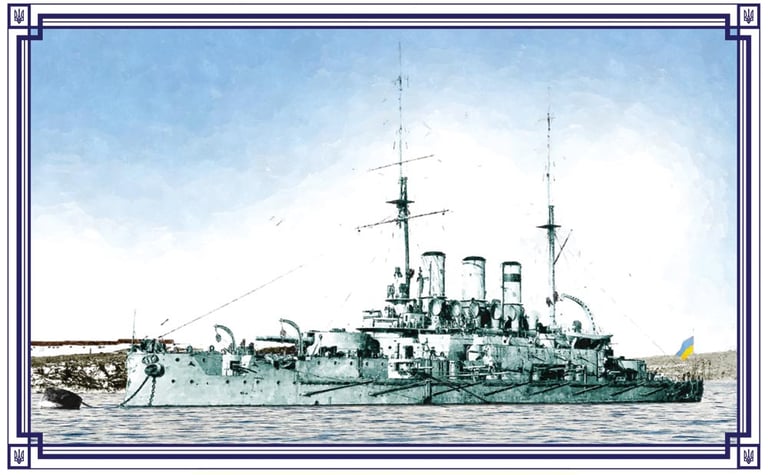
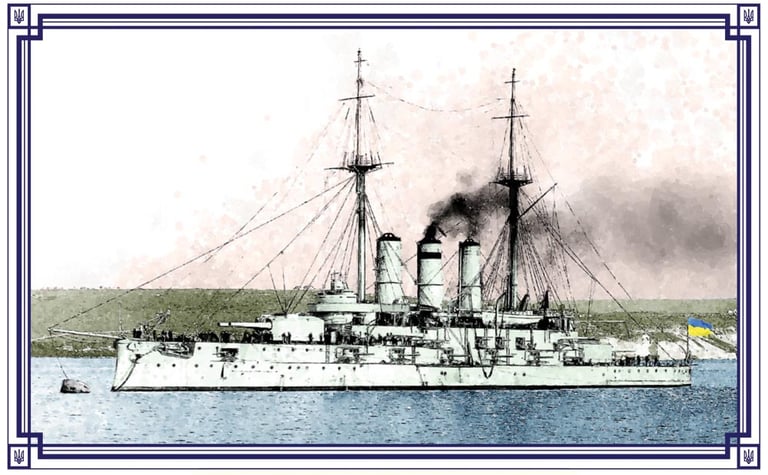
During 1917, Ukrainian naval circles began to form openly in Sevastopol. Meetings, assemblies, and political discussions among sailors intensified. Ukrainian-language newspapers circulated more widely, and cultural organizations became increasingly visible within the fleet’s social life.
This movement was not a spontaneous event limited to a single day. It developed gradually throughout the year, shaped by debates about national autonomy, statehood, and the future of the fleet itself. Many sailors began to question whether their loyalty should remain tied to a collapsing empire or shift toward the emerging Ukrainian political project centered in Kyiv.
The Ukrainian Navy 1917–1918 period represents an attempt to transform a former imperial fleet into a national naval force aligned with the Ukrainian People’s Republic. It was a bold political undertaking, driven not by leaders in Kyiv but by sailors who believed their allegiance belonged to the Ukrainian state that was taking shape.
At the same time, Bolshevik influence within the fleet was growing. Although initially limited in early 1917, it strengthened as the year progressed. Some Ukrainian naval patriots left Sevastopol — among them volunteers who formed a naval battalion named after Hetman Petro Sahaidachny. This unit was sent to Kyiv to help protect the Central Rada from possible aggression by Russian forces. Meanwhile, Bolshevik agitators were actively dispatched from Petrograd to Sevastopol, working to consolidate revolutionary control within the fleet.
When the Bolsheviks seized power in Petrograd in late 1917, their influence quickly spread to Sevastopol. Political control within the fleet shifted accordingly. Yet the Ukrainian movement did not disappear. It moved underground, preserving networks and maintaining communication among its supporters.
In the spring of 1918, as Bolshevik authority weakened in the region and the broader geopolitical situation shifted, the balance of power within the fleet began to change once again. The culmination of this movement came in April 1918.
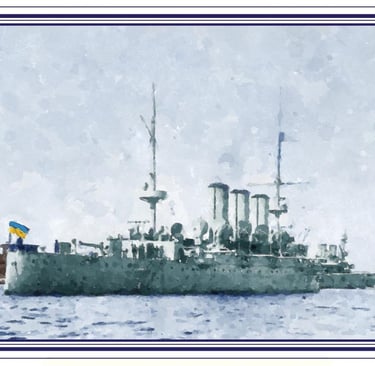
April 29, 1918: The Raising of the Ukrainian Flag
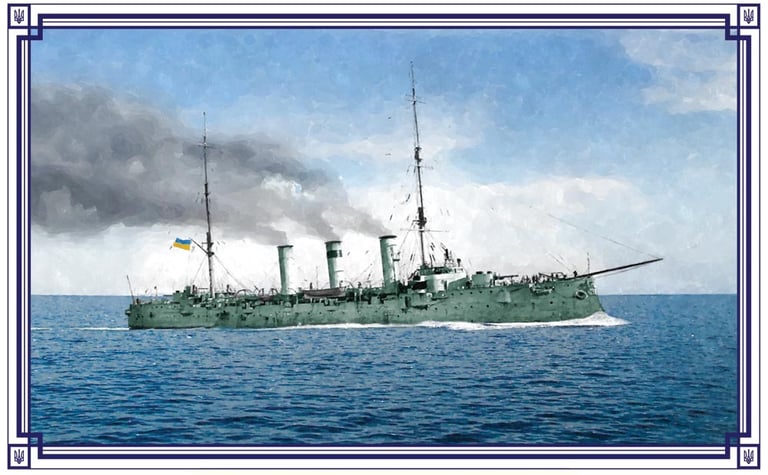
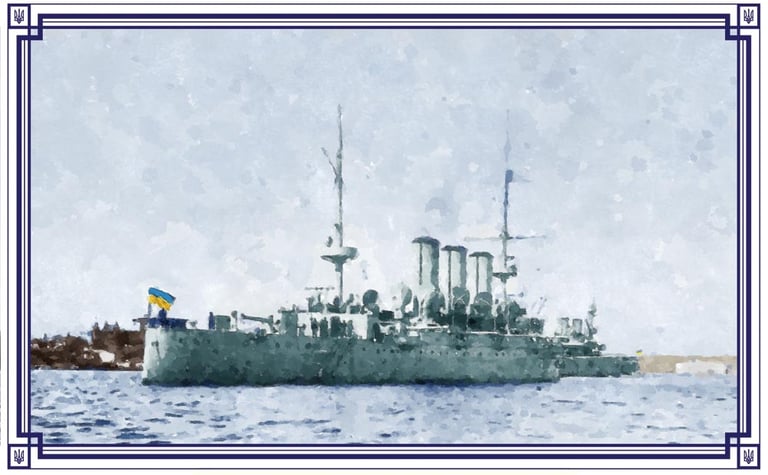
On April 29, 1918, ships of the Black Sea Fleet raised the Ukrainian blue-and-yellow flag. This act symbolized a declaration of allegiance and a shift in political identity.
For historians of naval and Eastern European history, the significance of this moment lies not only in the symbolism of the flag but in the scale of the decision. Entire crews participated. Officers and sailors alike were involved in a process that redefined command structures and political loyalty.
Although the geopolitical situation in the region remained unstable, and control over part of the fleet would shift again in subsequent days, April 29 remains a landmark date in Ukrainian naval history.
It marked the first large-scale assertion of a Ukrainian naval presence in modern times.
About the Documentary Neptun’s Trident
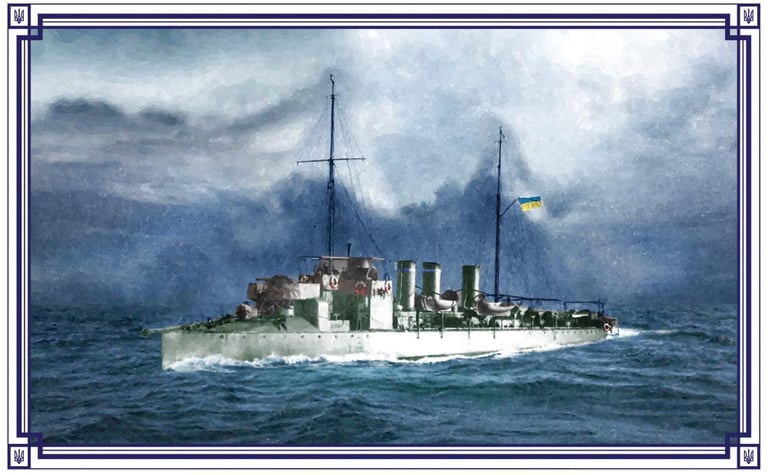
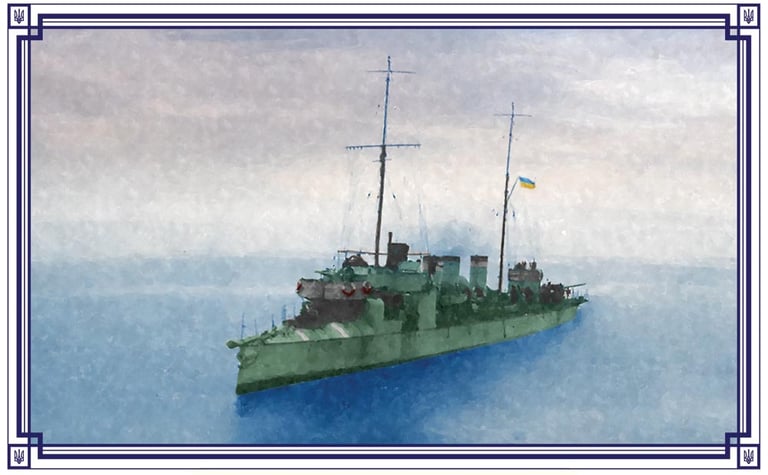
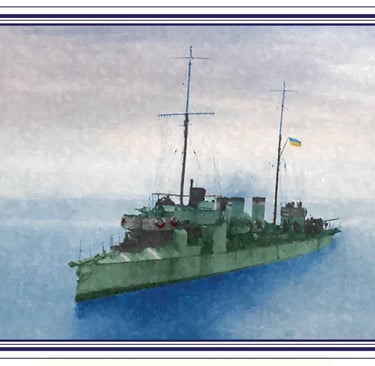
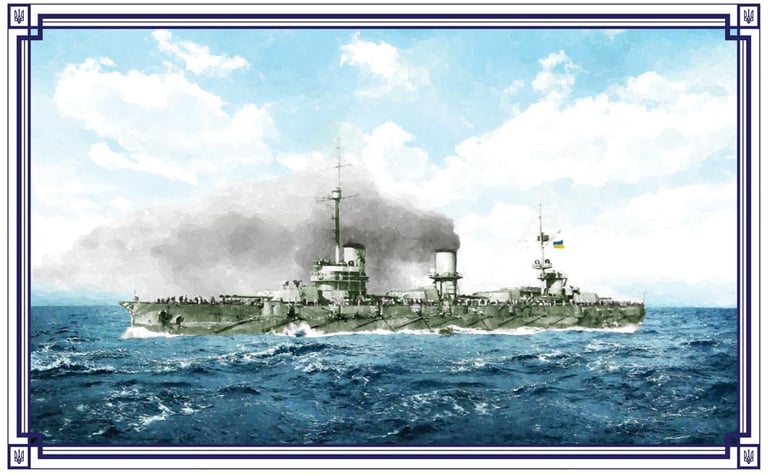
The documentary film Neptun’s Trident presents the story of the Black Sea Fleet 1918 through archival photographs, historical footage, and visual reconstructions. Produced with English subtitles, the film introduces international audiences to a chapter of naval history rarely addressed outside specialized scholarship.
Rather than focusing on large-scale battles, the documentary centers on identity, political transformation, and the agency of sailors within a collapsing empire. It highlights the human dimension of history: individuals making decisions amid uncertainty.
Narrated by Bohdan Beniuk and directed by Ivan Kanivets, the film combines historical research with visual storytelling. It also connects the events of 1918 with broader questions about statehood, national identity, and memory in Eastern Europe.
The Legacy of the Black Sea Fleet 1918
The raising of the Ukrainian flag in Sevastopol in 1918 did not immediately secure lasting control over the fleet. Political shifts, foreign interventions, and regional instability reshaped the Black Sea region repeatedly in the years that followed.
Nevertheless, the episode remains foundational in understanding the origins of the modern Ukrainian Navy. It represents an early assertion of maritime sovereignty and demonstrates that Ukrainian naval traditions did not begin in the late twentieth century but have deeper historical roots.
For scholars, students, and viewers interested in naval history, the Black Sea Fleet 1918 serves as a case study in how military institutions respond to revolutionary change.
For general audiences, it is a powerful reminder that historical narratives are often incomplete — and that rediscovering forgotten episodes can reshape our understanding of the past.
Why the Story Was Forgotten
Despite its importance, the events surrounding the Black Sea Fleet in 1918 were largely erased from Soviet-era narratives. Official histories emphasized different interpretations of the revolutionary period and often downplayed or omitted the Ukrainian dimension within the fleet.
Archival materials were scattered, destroyed, or reinterpreted through ideological frameworks. As a result, generations grew up without knowledge of the moment when the fleet raised Ukrainian flags.
Recovering this history requires careful examination of surviving documents, memoirs, photographs, and contemporary accounts. The absence of comprehensive archival collections has made reconstruction challenging, yet it also underscores the importance of preserving and re-examining historical memory.
Watch the Documentary
Neptun’s Trident is available with English subtitles and provides a visual exploration of this pivotal moment in naval history.
To understand the Black Sea Fleet 1918 and the Ukrainian Navy 1917–1918 in greater depth, we invite you to watch the documentary and explore related materials on this site.
Award
Film "Neptune's Trident" got special award of the Fifth International Film Festival "Kinolev" 2010


Navy History
Explore Ukrainian Navy's vibrant 1917-1918 legacy.
Help us in future projects by donating
© Ivan Kanivets 2025. All rights reserved.
Watch our other projects here: